Monday, February 22, 2021

Considering How We Look at Sports Club Experiences


The ‘negative impact upon children and young people’ has been noted by sports clubs among the top five challenges resulting from Covid-19 and the associated restrictions, with ‘how to engage and re-engage children and young people’ seventh on the list of knowledge and skill support required in the sports club environment (Sport NI Covid-19 Survey).  I have no doubt that creating the best possible experiences of club sport for young people, and for all members, is an enduring intention for all of us who are involved in coaching or volunteering within sports clubs.  But perhaps the current media prominence of the issue of young people’s experiences, alongside survey findings such as those referred to above, offers us a prompt for reflection on how we can turn ‘okay’ experiences into good experiences, good to great, and great to even greater!


Smith and Smoll (2007) suggest that the actions of a coach have an impact on how people, particularly children and young people, perceive and react to their sport experiences.  But that as coaches, we aren’t always as aware as we might be of our actions, how they are perceived by the participant, and the impact they have.  I don’t think it’s a huge leap to consider that this may well be the case for the wider club environment/experience.  So how do we find out more about these perceptions and experiences?  Well… in a club of 200 members, you may well have 200 different individual perceptions of experience.  Or when coaching a group of 20 young people – again each individual may well perceive their experience in a slightly different way, based on various factors. 

To change anything for the better, often we first need to shine a light on our own thinking and disrupt our perspectives, biases and assumptions – the ‘unfreeze’ stage of change (Lewin, 1947).  In the context of coaching and sports club experiences we might consider the immediate participant experience and the wider eco-system that surrounds the club and its people.

A useful tool to consider the factors that influence immediate participant experience is The Personal Assets Framework for Sport (Côté, Turnnidge & Evans, 2014; Vierimaa, Turnnidge, Burner & Côté, 2017).  This framework highlights three dynamic elements of Personal Engagement in Activities, Quality Social Dynamics, and Appropriate Settings.  Personal Engagement refers to the activities, games and practices that we as coaches create and lead to engage participants.  Quality Social Dynamics addresses the crucial aspect of coach-participant relationships and interactions between peers within the session, while Appropriate Settings refers to the suitability of the physical environment. 

(Adapted from Côté, 2014; Vierimaa et al, 2017)


When these ‘golden cogs’ work in harmony, the immediate participant experience can play a significant role, through the development of personal assets (confidence, competence, connection and character), in the realisation of the longer-term outcomes of sustained participation, personal development and performance.  As coaches, we might navigate consideration of our own influence on the experiences of participants through reflection on:

·         Our intentions or objectives
·         How we structure the activities we use
·         The coaching behaviours we adopt during the session
·         How we engage with the participants, how the participants engage with each other,         and how they engage with the activity

(Muir, 2018)

(Adapted from Muir, 2018)

Are there differences between our intentions and both our experiences and those of our participants? Have we become aware of perspectives that we weren’t previously? And what might we do now in how we design and deliver future sessions?

As well as immediate in-session experiences, there are a range of wider influences on participant experiences, as well as the experiences of club coaches, parents and volunteers – whose experiences are also important to consider, not least because they are significant enables and influencers of participant experience.  Some of these considerations and influences are summarised in the image below.


At the risk of winning today’s ‘stating the obvious’ competition, a straight forward way of gaining an insight into the experiences of participants and key influencers/enablers is to simply ask!  Four useful questions for this might be:

  • What could we, as a club, start doing to make experiences better?
  • What could we, as a club, stop doing to make experiences better?
  • What do we, as a club, do well already and should continue?
  • What do we do a little bit, that we could do more to make experiences better?

This could be done through a club online survey, or even better though individual or group conversations where you can follow-up to find out even more.  Remember the club experiences of coaches, volunteers and parents are important too!

Great experiences are more likely in a positive club environment.  So what does a good children’s sports environment look like?  Well… every context is slightly different and every individual is slightly different, but a good starting point would be to consider how your club’s practice compares to the iCoachKids pledge:

  1. Be CHILD-CENTRED
  2. Be HOLISTIC
  3. Be INCLUSIVE
  4. Make it FUN and SAFE
  5. Prioritise the LOVE for sport above LEARNING sport
  6. Focus on FOUNDATIONAL skills
  7. Engage PARENTS positively
  8. Plan PROGRESSIVE programmes
  9. Use different methods to ENHANCE LEARNING
  10. Use COMPETITION in a developmental way

Why not set aside a little time in the coming weeks to find out some more about the various perspectives and experiences, in-session and/or more broadly, of those involved in your club?


In response to need identified within its Covid-19 survey to support clubs, coaches and volunteers to consider ‘how to engage and re-engage children and young people’,  as part of its ‘Supporting Sport to Build Back Better’ programme, Sport NI is rolling-out a people development project entitled ‘The Club Experience’.  This will include support to explore sports club experiences and a new suite of learning modules for clubs, coaches and volunteers.  Watch out for further information on Sport NI social media channels. 

By Simon Toole, Coaching Consultant, Sport Northern Ireland

@CoachingTooleS @SportNINet #SportNILearning

www.sportni.net/learning

Further information on some of the content and concepts shared above can be found through the following resources:


Wednesday, November 18, 2020

Volunteers at the End of the Tunnel: Retaining Club Covid-19 Volunteers Beyond Covid-19


I don’t need to rehearse what a devastating, uncertain and challenging time that pretty much every aspect of life as we knew it has had since March of this year.  From a sport perspective this has generally impacted negatively upon opportunities to participate, face to face coach and volunteer development provision, club membership and operations, and the ability to generate revenue.  While not making up for these challenges in any way, this time has also seen some positives in relation to the advancements in technology usage and digital learning within the sector. 

One of the most heart-warming positives that I’ve seen first-hand, and heard about second-hand from governing bodies of sport that I work with, has been an apparent spike in sports club volunteers.  Yes, as unlikely as it may seem, in some clubs and some sports there seems to have been an increase in the number of people who are prepared to raise their hand and say ‘yes, I’ll help out with that’.  I fully accept that this spike may not have been at all universal – but, where it has occurred, I am now left with the questions…why has it happened? and… Is there any way we can encourage the new volunteers to stay involved at the end of the tunnel that we are currently in?

Where increases have occurred, most of these new volunteers have become involved in assisting sports organisations to deliver upon the Covid-19 protocols that they have put in place over the past six months, as Covid Officers or Marshals, to enable their activities to re-start. At the club where I coach, we’ve been really fortunate to have had 30 new parent volunteers get involved, who have taken on the task of checking-in every young player and coach as they enter the club facility on the Covid-19 registration App that the club uses.  This has made a huge difference in our ability to operate the club’s activities at the current time.  As a result, our Youth Coaches have been able to focus their attentions on creating positive on-pitch experiences that comply with Covid-19 guidance, rather than adding what would otherwise have been another additional task for the coaching team.

Over the past week or so, those who’ve raised their hand to help with ‘Covid Check-In In’ at the club have been good enough to give me a few minutes of their time complete a survey on their volunteering motivations now and considerations in the future.

Almost 60% of these valuable new volunteers hadn’t previously been involved in helping out with club activities – so why now?  Well, in true Family Fortunes style, ‘our survey said’… that the biggest reason for not previously being involved was limited time available/juggling other responsibilities.  Beyond that, responses included ‘not previously been asked’ and ‘didn’t previously feel I was needed’.  These responses aren’t unexpected based on previous, much larger, volunteer surveys.  But what was different this time?  Why did these people decide to answer the call?

From the responses I received, there seems to have been three common factors in this:

  • Desire to help get children back playing as soon as possible after lockdown.
  • To make a contribution to the club or support the volunteer coaches, and generally spread the workload at a time when they could see we really needed extra help, in appreciation of the opportunities that their child has received.
  • The flexibility of the ‘Covid Check-In’ role.

For context, the ‘Covid Check-In’ role at the club requires around 10 slots to be filled in any one week, and with a pool of 30 volunteers for the role - this means that individuals aren’t required every week.  The rota is operated from Google Sheets in a WhatsApp group and as such each volunteer can select slots around their own availability, and in a frequency that suits them.  The nature of this role seems to have addressed all 3 main reasons for not previously volunteering in that these individuals could see a way of helping that fitted around their other responsibilities, they could clearly see we needed help, and they were being asked to help if they could.

While for many of us it may still seem like a long-way off, at some point down the line, our clubs will be able to return to some form of normality.  So – is there any way that we could retain the involvement of these valuable new volunteers when we reach that point?  Much to my delight, 84% of my new volunteering colleagues at our club said yes, with the remainder replying ‘maybe’.  Brilliant news – but what as a club can we do to make that more likely?

The overwhelming majority of comments in response to this (64%) referenced flexibility, time, availability and frequency in relation to what was being asked of these volunteers.  Communication and organisation were also identified as important – ‘let me know what is needed, when, and give me good notice’, as was finding a role that would make a useful and practical difference. 

This additional support and spreading of the volunteering load is vital to help reduce the number of ‘off-field’ tasks for our coaches, managing what is being asked of them, reducing coach burnout, and as such increasing our chances of coaches at the club continuing to coach into the future.  In a sports club, as in most organisations, many hands really do make light work!

To finish, I humbly offer you my 5 top tips from the experiences of the past few months, and more importantly - the insight shared with me by the parent volunteers over the past week:

  1. Share what you need help with & paint a picture of what difference it will make.
  2. Ask people if they would be willing or able to volunteer some time (I know it’s obvious – but “not being asked” is so often a reason for not volunteering).
  3. Create volunteer roles that can be flexible around other time commitments.
  4. Factor in choice about how & when people can volunteer.
  5. Be planned and organised to allow for maximum notice & role clarity.


By Simon Toole, Coaching Consultant, Sport Northern Ireland

@CoachingTooleS @SportNINet #SportNILearning

www.sportni.net/learning


Tuesday, October 27, 2020

‘Hands Up’: Becoming a Reflective Coach


What makes a good coach? When I look at my mentors, I often wonder how they can deliver effective coaching so effortlessly. Do they have an innate ability, or have they worked hard to get to where they are today?

I am on the instructor development programme at Tollymore National Outdoor Centre, where I am learning to become an instructor and coach in climbing, hillwalking, and kayaking. I am lucky to have the opportunity to learn from and work with many experienced instructors and coaches. Often, I catch my internal voice saying, “How do they do it? There is no way that I will ever be able to do that!” The more I think about the components required to put a good session together, the more overwhelmed I become by the complexity of the job. The observations I need to make, the thoughts I start to have, the feedback I need to give and the expectations I have of myself as well as the expectations others have of me can be too much to process and the session can quickly fall apart.

As I worked with more coaches and got to know them better, I began to realise what makes them good at their job is not an innate ability to teach but a drive to keep learning and improving. They are incredibly talented at what they do, yet they still embrace learning and are continually developing themselves within and outside of their sport. A good coach keeps on learning. No matter how many problems they have solved in the past somewhere along the line there will be a new challenge to overcome.

When we fail, our first instinct is to try and hide it because we feel stupid or incompetent and we try to divert the attention away from our mistake. It is like in school when you do not want to raise your hand in case you answer the question wrong.

As coaches and instructors, we want to be competent and we want our students to see us as competent.  If we make a mistake then we fear that our reputation will be damaged, and our competency questioned. Our ideal situation would be not to make any mistakes at all. I am guilty of holding myself to that standard. Even though I am only beginning my career as a coach I expect my coaching sessions to be of a similar quality to that of a coach with 30 years’ experience. I put pressure on myself to be nothing less than perfect. A standard that I would not hold anyone else to because it is an unrealistic expectation. We are only human and for us to learn and develop as coaches we must first make mistakes.

Over recent months I have learnt that the coaches I trust most are those who are willing to hold their hand up and say ‘that was my mistake’ and can then reflect, learn and change how they deal with it in the future. This is a place of vulnerability because we must accept that we are not perfect and be honest with our weaknesses.

I am on a steep learning curve with lots of things to change and tweak. I take 10 or 15 minutes after every coaching session to write down what I felt did not go well and what I thought went very well. I highlight the successes as much as the mistakes. I need to build my bank of positive experiences as a resource to draw on when the voice in my head starts telling me that I cannot coach. In doing so I can remind myself what I have achieved as well as the challenges I have overcome. The more I go through this process of reflection the more progress I can see. A few weeks ago, I was coaching a beginner’s session in sea kayaks and it was a particularly windy day. Because I was both nervous and excited, I jumped straight into coaching and did not consider where the best place for my students to develop their skills would be. It was not until after the session, I noticed that if we went to the other side of the harbour wall, we would have had more shelter. This would have created a better environment for learning. After every session, I find something to improve.

Being a reflective coach is better than being a perfect coach. We need to accept that we are not going to be perfect all the time, that we will make mistakes and when we do, we can deal with them in a constructive manner. I do not have all the answers on how to be a good coach, but I strongly believe that being able to reflect on your sessions is a critical skill to have and will allow you to become a better coach.

By Effie Ellis-O'Neill, Trainee Instructor, Tollymore National Outdoor Centre,

Sport Northern Ireland

@SportNINet #SportNILearning @TollymoreNOC

www.sportni.net/learning 

Wednesday, September 30, 2020

Coaching Hollywood


I was asked recently where my interest in sport had peaked from. The question made me stop and think for a second. Where had my love of sport, which has since filled many waking hours, originated from? Upon reflection the answer seemed to lay somewhere in the summer of 1994 when World Cup USA captured my attention and curiosity. The fact that the final ended in a scoreless draw, didn’t stop me marvelling at Romario and Baggio leading the line for their respective countries. It was also about this time that I started to enjoy sporting Movies too. Cinematic sporting adventures reeled me in and soon I found myself watching every sporting movie I could get my hands on, something that continues to this day.


One movie in particular for some reason had a profound effect on me – the Mighty Ducks! For anyone who hasn’t seen this show, firstly, come on!? And secondly, the movie centres on a group of underdog ice hockey players who come together under the leadership of an initially reluctant, but later caring and supportive coach, named Gordon Bombay. I’m quite sure the movie didn’t win any Oscars, but for some reason it gripped me. It made me want to be part of a team, to contribute to something bigger than myself and I was fascinated how a coach could bring so much joy and fulfilment to those around him.


I’m under no illusions that our real life sport endeavours accurately reflect a Hollywood script, but I have seen real life Gordon Bombay’s. Woman and Men who bring that same sense of joy and fulfilment to athletes and participants around the world each and every week. I find myself wondering at times if the coaching characters in the movies are inspired by the real life coaches who have encouraged and supported us throughout the years. Although I’ll admit I’ve also met a few Mike Bassett’s on my travels too.  


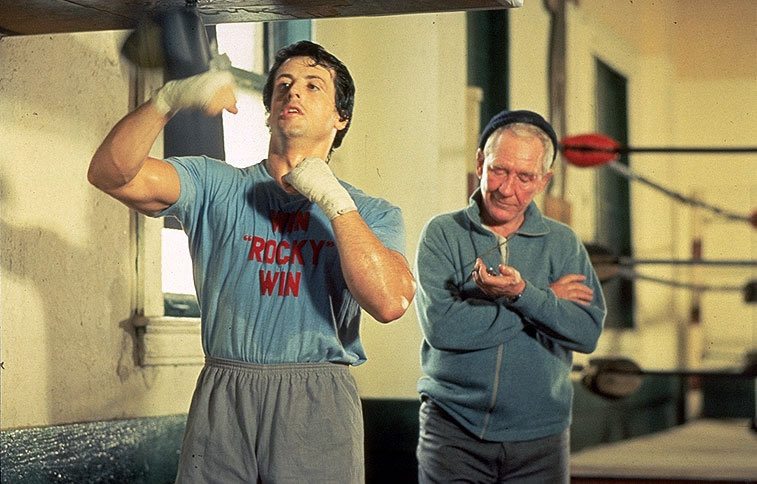
In addition to Coach Bombay there’s a few other coaches from the silver screen which jumped to mind when writing this blog. Micky Goldmill may best be remembered for encouraging Rocky Balboa to chase chickens, in order to develop ‘greasy, fast speed’. However I much prefer to recall his deep connection with his athlete and fostering a beautiful relationship which supported the southpaw through some of his toughest times, both inside and outside the ring.  


The story of Ken Carter, the Richmond High School Basketball Coach, was captured in ‘Coach Carter’. The movie was based on true events, and the story demonstrated how the coach valued the person before the player. It is evidently clear throughout the movie that Coach Carter is adamant that being a better person makes you a better basketball player. His coaching methods challenged his team to consistently demonstrate high social standards and used basketball as a vehicle for developing and refining wider life skills.


We all know sport in real life isn’t scripted and we rarely get to have a second take if we mess up our lines, but these fictional characters display behaviours and connections which often reflects great coaching, at least they always did to me.


It would of course, be amiss of me not to offer admirable mentions of these amazing movie coaches: Chubs Peterson (golf), Herman Boone & Tony D’Amato (American Football), Mr Miyagi (Karate) and Patches O’Hoolihan from the American Dodgeball Association of America.


It’s up to us as coaches to go and create our own stories, they may not ever make the box office but we can use sport to change so many lives for the better.  


By Michael Cooke, Club & Coaching Consultant, Sport Northern Ireland

@coaching__mc  @SportNINet #SportNILearning

www.sportni.net/learning

Thursday, August 13, 2020

“A life enriched by coaching” … a lockdown reflection with Dad

Growing up in the Smyth house-hold meant being surrounded by coaching. I don’t mean Dad taking on the role of the PE teacher from Kes in the back garden … because nothing could be further from his style! But the importance of coaching and the impact it could have on the lives of those being coached and those doing the coaching, was ever present.  As a club, Interprovincial and International level coach and coach educator, the hockey season was spent watching Dad work with players and the summers were spent watching him work with his coaching colleagues. On more than one occasion, family meals were shared with World Cup and Olympic winning coaches and it was only relatively recently that I appreciated why hockey people had spent so much time discussing “The Inner Game of Tennis”!

In a bid to navigate his way through lockdown and find focus in a project, Dad, with the assistance of Mum, has taken to putting his memoirs to paper over the last few months. I was fortunate enough to get a sneak preview recently. In between a few tears and lots of laughs, one thing was strikingly obvious; throughout the majority of his life, even before he probably considered himself to be one, coaching has always been and continues to be the thing that makes Dad ‘tick’. To quote one of my favourite sporting movies, coaching is his ‘Happy Place’ and has undoubtedly enriched his 70 plus years of life just as much, if not more, than the multitude of players and coaches he has, in his own words, “had the pleasure” of working with.


Which got me thinking … for those of us charged with trying to encourage new recruits into coaching, could we shout a little louder about the opportunities that exist and the enjoyment it may bring to their lives? Through the medium of Zoom, I challenged Dad to turn the clock back 50 years and talk to his 21 year old self about the most rewarding parts of the journey that lay ahead. This is my interpretation of what I heard …

Inspiring the next generation

By becoming a coach you’ll have the opportunity to inspire the next generation, in a way that you probably can’t imagine right now. The good news is, in all likelihood, you won’t need to be a tactical genius or a technical wizard to do it; but by making it fun, being interested in the person and not just the player and role modelling the values and behaviours you would like to see in them, you can be a really positive influence on the lives of the people you work with. Remember that while a little bit of success as a coach is always nice, in years to come, you might just look back and consider how successful you were through a very different lens; seeing the players you coached now coaching and their children (or grandchildren!) in love with the sport will be just as satisfying as any victory on the pitch. And, if you’re fortunate enough to hear the words ‘you’re the reason why’ or ‘if it hadn’t have been for you’ from time to time, you’ll understand how much more important they are than any trophy or medal.

Learning Community

I was never much of a fan of school. Probably because I was always more interested in looking out the window to the sports pitches than listening to what the teacher was saying at the front of the classroom! But by becoming a coach you will have the chance to enter the most amazing learning community, where every session and each game can provide you with the opportunity to grow, develop and challenge yourself and others around you; particularly in skills and qualities that can enhance your life outside of coaching – like resilience, trust, communication and empathy … and all within a sport that you love. As a coach you will be offered regular and varied development opportunities; often this may be as simple as an interesting conversation with a colleague. Embrace and immerse yourself in as many of these as you can and seek out a good mentor – they will help to guide you through the ‘fog’ when times feel tough.


Friendships

Over the years you will have the opportunity to develop the most unexpected, life-long friendships through your coaching, often spanning across generations; with your players, the opposition, fellow coaches, sports volunteers and the often, much-maligned parents. Try not to keep parents at arm’s length. Involve them as fully as you can and be open and honest with them about what you’re trying to achieve. Remember that you are taking care of the most valuable thing in their lives. If they can see that you have the best interests of their child at heart (and as coaches we should ALWAYS have the best interests of the child at heart!), they might not always agree with you, but, over time, they will respect and support you. During the COVID-19 restrictions, my wife and I were overwhelmed by the support and generosity of our friends … the food shops, fresh baking, prescription collections etc … almost all received from parents of players I had coached over the past 40 years! 

Lifelong involvement

I’ve often heard the saying that “nothing ever beats playing”. Maybe so but rest assured that, sooner or later, ‘Father/Mother time’ will prove to be your toughest opponent! Coaching can be a great way to continue to stay involved in and contribute to the sport that you love, long after the body has started to creak a little too much to make it on to the playing arena. Even before that inevitable day has arrived, it is worth considering that the experience of coaching others while you are still playing may well improve your own enjoyment and performance, as you gain a better appreciation of developing skills, understanding tactics and improving how you communicate. So don’t wait until the ‘boots are hung’ up to get involved. Clubs and governing bodies should always be keen to support the next generation of coaches and you might just be surprised how well young players will react to you if you do.  

As the conversation was drawing to a close I was struck by the number of times that Dad had used terms such as ‘opportunity’, and ‘chance’ when describing the journey that lay  ahead to his younger self and queried this with him.  His response seems like an appropriate note to finish on.

“That’s because coaching is like most other things in life – there are rarely any guarantees and you’ll only get out what you put in. So get involved, commit to it as fully as you can and enjoy it … and when you take time to reflect in 50 years (or more!), you’ll not be disappointed by how much your life has been enriched by coaching!”

By David Smyth, Coaching Consultant, Sport Northern Ireland

@SportNINet #SportNILearning

www.sportni.net/learning

Tuesday, July 14, 2020

From Camlough to Canada: Building Your Community of Coaches

Through the Covid-19 lockdown I’ve been fortunate enough, as a ‘coaching enthusiast’, to have been in the host’s seat or supporting the delivery of twenty three webinars and six online sense-making sessions, and as a delegate participated in around twenty online sessions with partner or external organisations.  I’ve managed to hear from some of my favourite authors, coaches and researchers across the field of sports coaching, had access to some world leading people, and learned of the work of some people I’d not previously known of – but loved.  It’s been a genuine privilege to listen to all of the various experts over the past four months, and in many ways – an even greater privilege has been getting the opportunity to chat with coaches from Camlough to Canada, Fermanagh to Falkirk, Newtownabbey to the Netherlands.

Local or international, I’ve met coaches through the various sessions I’ve been involved in who’ve been driven by positive intent, a thirst for knowledge and a desire to enhance the experience of their athletes/participants.  Interactions with these coaches, particularly through the ‘chat box’ sense-making sessions, has given me much to consider, from the perspectives of my own coaching and my coaching development role at Sport Northern Ireland.  I think/hope these discussions have also sparked ideas and reflections among the coaches involved, and provided an opportunity to hear the thoughts and perspectives of others in similar roles.  If we’ve achieved a sense of reciprocal sharing, we are onto a winner! 


My observation through lockdown was that the world of coaching got a little bit smaller and more connected.  All of the tools that have allowed this to happen were there before Covid-19, and coaches were connecting with peers long before now, it just didn’t seem as widespread and regular as it has been over the past four months.  Is it that we are now more familiar with the tools? Is it that we’ve had more time available to connect as face-to-face coaching hasn’t been possible? These questions lead me to another two…

While technology has provided us with some amazing tools for connecting with others, especially oversees, as restrictions ease can we make it back to face to face interactions with coaching peers? And, can we find the time as coaching ramps back up to build upon new and existing connections for coaching conversations?

I think if the connections are valued enough, time will be found to continue to interact with peer coaches in some form or another, and it doesn’t have to be when a sporting body decides it is happening.  Any coach, anywhere could build their own sharing group at any time, with any one, and in any way that suits them.  It could be online, it could be face-to-face; it could be with coaches from inside of your own club, it could be with coaches from outside of your own country; it could be coaches from your own sport, it could be with coaches from different sports, it could even be with people beyond sport; it could be with one other person, it could be with a dozen other coaches.  All of these decisions are for you and those you choose to connect with.


The principle of reciprocity in influence suggests that people are more likely to give back, to those who have given – and this could be important in how you establish your own connected community.  Who would benefit from insights and perspectives you could bring? And, likewise who could you benefit from conversations with?  You might think of this like ‘desert Island discs’ – who are your ‘desert island coaches’?

Don’t get me wrong, the opportunity to draw upon leading experts is important – it really helps to lift thinking to new levels based on the available research base, it helps answer some of the complex questions we have or even provoke more questions for our practice, and we should definitely be taking the opportunity to benefit from that in whatever form it comes when we have the chance.  But sitting alongside that, and interacting with it, as coaches we can each take things into our own hands by creating our own connections to make sense of available expertise, to test ideas, challenge our thinking, and to feed our own curiosities.

So what now… How about having a think today…

Who do you know that you would like to talk coaching with? What do you have to offer each other? How, and how often, would you want to connect?

  …and take the first steps in creating a connection, or group, that brings mutual benefit to support the thinking and practice of you and your fellow coaches.  


By Simon Toole, Coaching Consultant, Sport Northern Ireland

@CoachingTooleS  @SportNINet #SportNILearning

www.sportni.net/learning


Tuesday, June 16, 2020

How the Cookie Crumbled: Coaching through Covid

The early weeks of March 2020 now seem a distant memory and at that stage I really didn’t think that 14 weeks later I wouldn’t have coached a single session in the normal face to face manner with my Portadown FC Youth 2008’s.  While we all knew that Covid-19 was going to have an impact, it was hard to believe at that stage what lockdown would really mean for our everyday lives.

A normal coaching week would see me deliver sessions for the 2008’s on a Monday and Wednesday for 29 boys alongside my 4 co-coaches with games on a Saturday in the NIBFA National League and the Mid Ulster Youth League.  A lively bunch who love playing the game but most importantly enjoy each other’s company and having some fun.  After a week of suspended club activities, lockdown arrived meaning they were now suspended indefinitely or so we thought.

In the early stages of lockdown did we really envisage what lockdown actually meant?  I’m not so sure!  From a far I had seen the footage of other countries already in this stage, empty streets, roads with no traffic it seemed strange and it certainly was once reality arrived.  I have always enjoyed coaching and get a great deal of enjoyment from it on a weekly basis, seeing the young players develop from both a skill perspective but also as people, this had now been taken away, and as a coaching group we wondered what was possible in this new normal.

Quite early in lockdown it was evident that sport had a few innovators and social media had examples of people delivering sessions in a different way through mechanisms in the virtual world.  Delivery was now possible again with an array of opportunities such as Zoom, WebEx, Microsoft Teams or Facebook Live. The advent of Zoom in work gave me an opportunity to test Zoom in the club environment and following a discussion among the coaching team it was agreed that it would be good to offer an opportunity of regular contact during lockdown.

So I set up a zoom account and embarked on organising our first session, with the focus just to catch up with the kids and see how they were, alongside showing them some skills that they could practice at home. The kids loved it, an opportunity to see their football mates and have a bit of craic, I was surprised they enjoyed it so much, but why? If you think back to your own youth you were probably ahead of the game from a technical perspective of that of your parents or grandparents.  When I was 8 my Granda got his first Video Recorder and within a couple of weeks I knew it inside out – much to my parents dismay as I wasn’t supposed to touch it.  Now I am the one seeking advice or help from the younger generation!  We now live in a technical world were kids have all the gadgets to maintain contact, mobile phones, xbox, playstation and various apps.  However the important distinction at this point is at times they still need the activity to be organised or facilitated even if they don’t think that is the case.

In that first zoom we asked them what they wanted the sessions to be and they talked about fun stuff and quizzes, and we had introduced trick shots so they wanted to continue with these but create them themselves and then challenge each other. Was this important?  I think so as it gave them a connection straight off and a feeling of being involved.  I hadn’t really asked myself what was the need, what was the why? I’m a coach, lockdown had stopped my coaching this was an opportunity to restart - let’s go with it and see what happens, it doesn’t need to be planned or structured, it can be what it is.  This makes me think… do we sometimes try to structure too much rather than go with a flow, or leave sessions open to challenge, or development as we go through them?  How often at the start of a session do we say what do you want to do tonight? Session objectives can still be delivered in a session that isn’t the session that has been planned, you just need to be innovative or creative to do so.

So over the last 14 weeks we have went for it, we have had trick shots, coaches’ challenges, player led match analysis, quizzes of various types and a Chocolate Chip Cookie Bake Off.  The Bake Off was certainly a highlight and nowhere near my thoughts when we set out on this journey.  Ten minutes in, when I realised I had told them to put double the amount of flour in as was needed, I did think “what am I doing?”  But someone always rescues a session, and in this case it was one of the boys Mum’s who shouted across the virtual space “put a cup of water in and it’ll be fine”, and as we all know Mum’s know best! and the cookie’s were great!!!

So in summing up what has this lockdown journey created, at a webinar early in lockdown Mark Garraway had discussed the importance of ‘belonging’ and defined this as the “degree to which athletes feel they are cared for, respected and connected to their club”.  Do not be afraid to try something different as in some ways you are always creating the new normal.  Lockdown has given this group of players a greater sense of belonging to their club, through activities that they have suggested and participated in and we will no doubt discuss the memories that we have created for years to come, especially every time one of us has a chocolate chip cookie!


by Alan Curran, Club & Workforce Manager, Sport Northern Ireland

@alan_curran @SportNINet #SportNILearning 

http://www.sportni.net/learning/ 


Does Psychological Safety Have a Place in Coach Development?

  The date was set. The morning arrived. I jumped in the car with an assortment of nerves, anxiety and excitement. I was making my way to co...